Net Metering Laws in the US

How Do Net Metering Laws Work?

In 1978, the “PURPA” (Public Utility Regulatory Policy Act) was signed to allow organizations other than utilities to produce power (more Information). If you generate power from any source, the utilities must buy it from you.
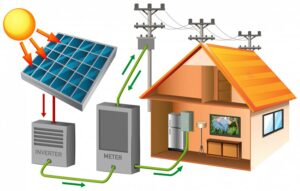
Net Metering Laws


Safety is an issue; you could not build a nuclear power plant in your backyard. However, if you install a UL-listed, electrically inspected solar or wind generation system, the local utility will purchase any power you generate.


The way it works is simple.

  • The solar panels on your roof generate Direct Current (the same kind of electricity you get from a battery)
  • An Inverter, the system’s brain, changes the electricity to an Alternating Current. (the type of electricity that comes into your home from the utility grid).
  • The inverter is connected to the main circuit-breaker panel in your home.
  • When you use electricity, you use the power generated by the solar panels first; if you need more, you use power from the utility. The inverter is responsible for this.
  • If you generate more power with the solar panels than you need, the excess flows back to the utility—backward through your meter.


Different states and utilities have various legislation called ‘net metering laws.

1 – You are not allowed to produce power during a power outage. This could be dangerous to a utility lineman.

2 – You cannot produce more power in a year than you use – the utility will not write you a check. The lowest that your utility bill can be is zero.

3 – You may need to replace your electric meter with one that allows this two-way flow.

Benefits of Net Metering Laws for Homeowners

Net metering laws provide significant financial benefits for homeowners who invest in renewable energy systems such as solar panels. By allowing excess electricity to be sent back to the grid in exchange for credits, these laws help reduce monthly electricity costs and improve the return on investment for solar installations.

Another important advantage of net metering laws is that they encourage the adoption of clean energy technologies. As more households generate electricity from renewable sources, dependence on fossil fuels decreases, thereby lowering greenhouse gas emissions and advancing a more sustainable energy future.

However, net metering laws differ from state to state. Some states offer full retail credit for excess electricity generation, while others provide lower compensation rates. Homeowners should review the specific net metering laws in their area before installing a solar energy system to understand the financial implications and eligibility requirements.

As the energy landscape evolves, net metering laws are expected to continue playing an essential role in supporting distributed energy resources and promoting greater consumer participation in electricity generation.

Future of Net Metering Laws in the United States

The future of net metering laws will likely depend on technological advancements, energy policies, and consumer demand for renewable energy. As battery storage systems become more affordable, homeowners may gain even greater flexibility in managing their electricity usage and reducing dependence on traditional utility providers. Policymakers continue to debate the structure of net metering programs to ensure they remain fair for both consumers and utility companies while encouraging investment in clean energy solutions.

Net metering laws vary from state to state in the United States. Understanding net metering laws can help homeowners make informed decisions about investing in solar energy systems and maximizing their financial benefits. In addition to financial savings, net metering programs encourage greater adoption of renewable energy technologies across residential communities. As awareness of environmental issues continues to grow, homeowners are increasingly seeking sustainable energy solutions that reduce carbon emissions and support energy independence. Understanding local net metering regulations can therefore play an important role in the transition toward a cleaner and more resilient energy future.


Click here to see current Net Metering laws in the United States.